 MetaStocker
Titles & keywords
Food Photography Keywords Without Guessing Ingredients
A bowl of red soup with green leaves looks simple to describe, but metadata can become inaccurate quickly. The image may show a red soup, a bowl, a spoon and green leaves, yet it does not prove that the recipe is vegan, organic, gluten-free, homemade or connected to a particular cuisine. A useful keyword list stays close to what a buyer can actually see, while confirmed production notes can add carefully supported details. This guide shows how to create practical English metadata for a food photograph without inventing ingredients.
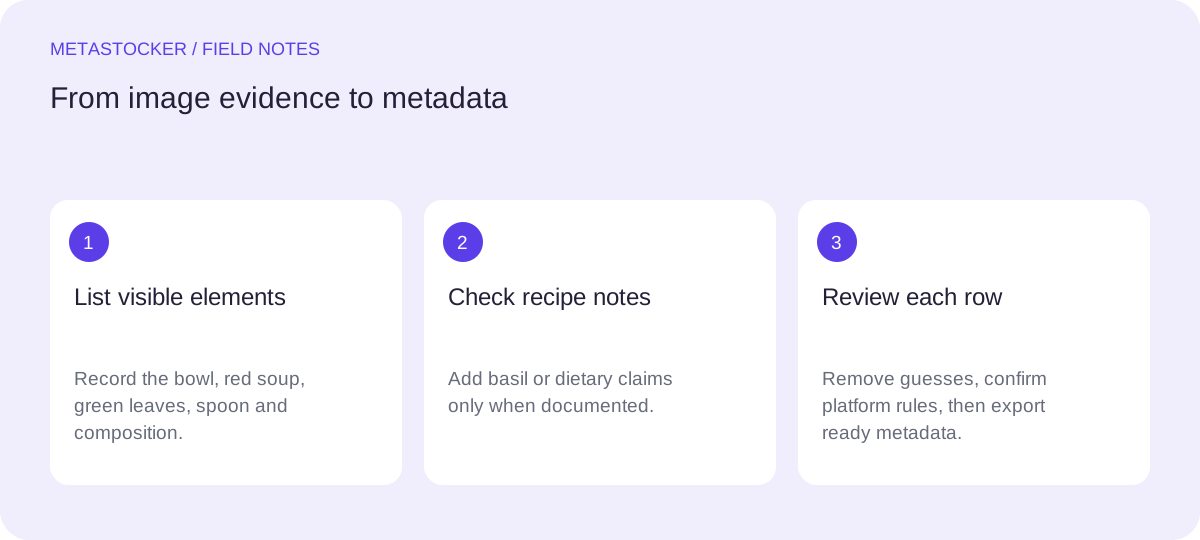
Start with visible facts
Describe the subject, arrangement and photographic treatment before thinking about search volume. For this image, visible observations include a soup bowl, red soup, green leaves, food and a close-up. Add composition terms only when they are true, such as top view, overhead, spoon or copy space. A red soup alone does not establish tomatoes, and green leaves do not establish edible herbs.
Avoid turning visual impressions into recipe claims. Red color does not confirm a specific tomato variety, and green herbs do not identify basil, parsley or cilantro unless you know which herb was used. Steam can suggest warmth, but it does not establish a serving temperature or cooking method.
- Use nouns buyers might use to find the subject.
- Add viewpoint, lighting or composition only when visible.
- Remove any word that depends on an unverified recipe detail.
Visible evidence: a bowl, red soup, green leaves, spoon, table surface.
Supported terms: soup bowl, red soup, green leaves, food, close-up.
Require recipe confirmation: tomato soup, herbs, vegan, organic, gluten-free, basil, Italian cuisine.
Separate observation from confirmation
Ingredient metadata becomes stronger when it comes from a reliable production note rather than visual guessing. If the photographer recorded that the soup contains tomatoes and basil, those terms may be considered. If a recipe document confirms that the dish is vegan or gluten-free, those claims can also be evaluated against the target marketplace’s current rules.
Keep the distinction visible in your workflow. “Green leaves” describes the visible appearance; “herbs” identifies an ingredient and needs confirmation. “Basil” is a confirmed ingredient only if your notes support it. “Vegan” describes the recipe or preparation, not the bowl’s appearance. If no documentation exists, leave the narrower claim out.
- Treat recipe notes as evidence, not as a license to add every dietary label.
- Do not infer named cuisine from color, garnish or presentation.
- Check current contributor requirements when a platform has specific metadata rules.
Put the strongest terms first
Adobe’s keyword guidance gives particular importance to the first ten positions. Put the supported subject first, followed by the container, visible elements and useful context. Without recipe notes, a practical sequence could begin with red soup, soup bowl, soup, green leaves, spoon, close-up, food photography. With confirmed tomato and herb ingredients, the more specific terms tomato soup and herbs become possible.
Do not repeat the same idea through near-duplicates simply to fill space. A shorter list of relevant terms is easier to audit than a long list containing generic or speculative tags. Platform limits differ, so use the current contributor portal as the final authority; for Adobe Stock, the general keyword guidance permits up to 49 keywords, while CSV requirements should still be checked before import.
- Lead with the exact dish when it is supported.
- Group related concepts in a readable order.
- Use the portal’s current limit and language requirements.
Worked example: two metadata versions
The following is a hypothetical example, not a measured search result. Assume the photographer has a preview but no recipe notes: it shows red soup, unidentified green leaves and a spoon. Version A uses only these visible facts. Version B becomes possible after a recipe note confirms tomatoes, basil and a vegan preparation.
The tradeoff is precision versus unsupported specificity. “Green leaves” describes the visible form without identifying an ingredient. “Tomato soup,” “herbs,” “basil” and “vegan” belong in Version B only when production notes confirm those claims.
- Version A: use when there are no confirmed recipe notes.
- Version B: use only when the stated ingredient and preparation are documented.
- Recheck every term after changing the recipe or crop.
Hypothetical Version A
Title: Bowl of red soup with green leaves
Keywords: soup bowl, red soup, soup, green leaves, meal, spoon, close-up, food photography

Hypothetical Version B, only with confirmed notes
Title: Vegan tomato soup with basil in a bowl
Keywords: vegan tomato soup, tomato soup, soup bowl, basil, herbs, red soup, savory food, meal, spoon, close-up, food photography, plant-based meal
Prepare metadata for a marketplace
Write metadata in the language required by the target account or platform. An English-language marketplace may need English titles and keywords even when your working notes or blog are in another language. Do not assume one list fits every marketplace: keyword counts, categories and wording rules can differ, and contributor policies can change.
If you use MetaStocker’s local generator, provide factual batch context rather than a blanket phrase such as “healthy vegan dishes” for mixed files. Local models run in the browser after the required model is downloaded and loaded; generation is not a substitute for your review. Inspect each editable result, remove guesses, and export only rows you are ready to check in the contributor portal.
- Keep the filename matched to the correct image.
- Review generated tags file by file.
- Treat CSV export as preparation, not submission or acceptance.
Do a final accuracy pass
Read the title as a factual sentence. Then inspect the first several keywords and ask whether each one is visible, documented or merely plausible. “Comfort food” is an interpretive concept that may be acceptable for some uses, but it is less literal than “tomato soup”; retain it only when it fits your intended context.
Finally, compare the result with the destination’s current rules. A clean list cannot guarantee indexing, ranking, sales or acceptance, but disciplined evidence-based metadata gives reviewers and buyers a clearer description of the image.
Before you continue
- Confirm visible elements from the image and ingredient names from reliable notes.
- Use “green leaves” for appearance; use “herbs” only if that ingredient is confirmed.
- Do not add vegan, organic, gluten-free or cuisine claims without evidence.
- Place the most important terms at the beginning.
- Remove repeated, irrelevant or speculative keywords.
- Check the target platform’s current language and limit rules.
- Inspect every generated or exported row before using it.
Sources and editorial approach
Prepared with AI assistance. Worked examples are illustrative. Automated checks do not replace checking the requirements of your stock platform. How these guides are made.