 MetaStocker
Titles & keywords
Stock Photo Title Examples: Clear Before-and-After Edits
A strong stock photo title tells a buyer what is visibly present and why the image may be useful. It is not a hidden keyword list, a sales promise, or an opportunity to invent a story behind the pixels. The most useful titles usually combine the main subject, the visible action or setting, and a meaningful context when the image supports it.
This guide uses three hypothetical examples: a red umbrella on wet pavement, hands folding linen, and seedlings beside a window. The goal is to tighten vague wording while keeping each title natural, accurate, and easy to adapt for a stock marketplace. Put the most important terms near the beginning, then remove repetition and unsupported assumptions. Always check the current requirements of the marketplace where you plan to submit.
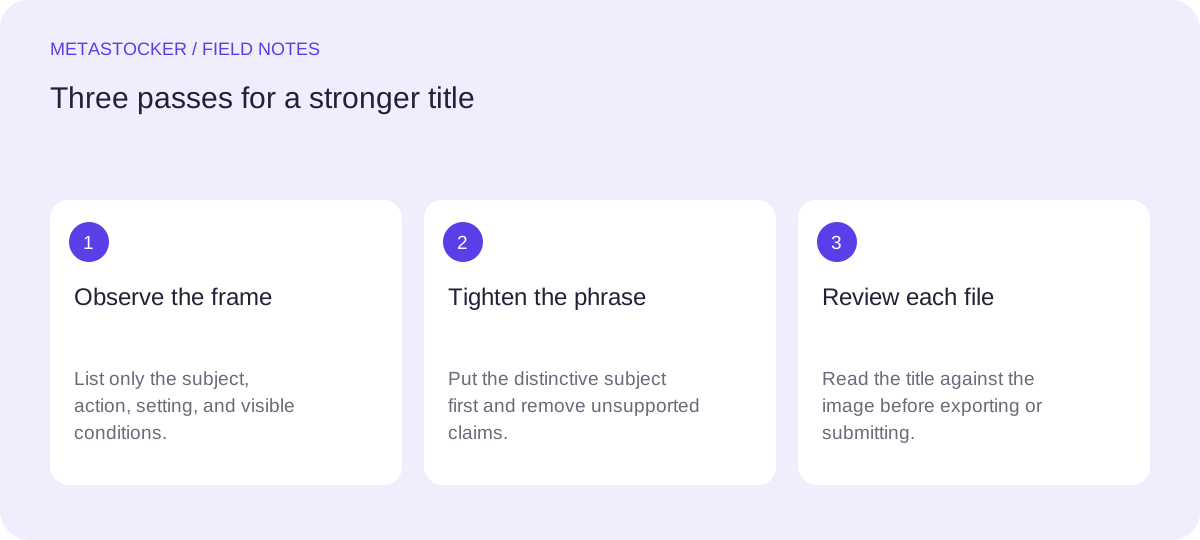
Start with what the viewer can verify
Before writing, describe the image as if you were explaining it to someone who cannot see it. Identify the central object, visible action, setting, and any useful visual quality such as copy space or a close-up view. Then decide which of those facts belong in the title.
Avoid adding information that is not visible. A pair of hands does not identify age, gender, profession, or relationship. Seedlings by a window do not prove that they are organic, a particular species, or part of a commercial farm. Accurate restraint is more valuable than imaginative detail.
- Name the main subject first.
- Use one clear action or condition.
- Add context only when the image supports it.
- Exclude identities, locations, dates, and claims you cannot verify.
Vague: “Beautiful lifestyle image with many concepts”
Tighter: “Hands folding white linen on a wooden table”
Use a simple title structure
A practical structure is subject + action or appearance + setting or purpose. You do not need every possible keyword in the title. The title should read like a descriptive phrase or sentence, while relevant keywords can provide additional searchable detail according to the platform’s rules.
For many stock workflows, the opening words carry particular importance. Lead with the distinctive subject rather than generic terms such as “image,” “photo,” “background,” or “concept.” If the scene has useful copy space, mention it only when that space is genuinely visible and relevant.
- Prefer “red umbrella on wet pavement” to “rainy weather concept image.”
- Keep related words together so the scene is immediately understood.
- Remove adjectives that express opinion rather than observation.
- Do not repeat the same noun in slightly different forms.
Structure: distinctive subject + visible condition/action + setting
Possible title: “Red umbrella reflected on wet pavement after rain”
Worked example 1: red umbrella
Suppose the image shows one bright red umbrella resting or moving across rain-darkened pavement. The reflection and wet surface are visible, but the owner is not. A vague title such as “Rainy day mood and travel concept” hides the strongest visual details and introduces a travel interpretation that may not be supported.
A tighter title gives the buyer concrete information first. “Red umbrella reflected on wet pavement after rain” describes the subject, a visible relationship, and the weather condition. If there is clearly empty space for text, an alternative could be “Red umbrella on wet pavement with copy space.” Do not use both versions unless the composition truly supports both claims.
- Keep “red umbrella” near the beginning.
- Use “reflected” only if a reflection is visible.
- Use “after rain” when the wet surface supports that reading.
- Avoid guessing who owns or carries the umbrella.
Before: “Rainy day mood and travel concept”
After: “Red umbrella reflected on wet pavement after rain”
Worked example 2: hands folding linen
Imagine a close view of hands folding a white linen napkin or cloth on a table. The hands and material are clear, but the image does not establish the person’s identity, occupation, age, or household. “Professional cleaner preparing luxury hotel” would overstate what can be known.
A more dependable title is “Hands folding white linen on a wooden table.” It identifies the visible action, material, color, and surface without turning a domestic scene into a hotel narrative. If the image unmistakably shows several arranged place settings, “Hands folding linen napkins for a table setting” may be appropriate, but only when that context is visible.
- Describe hands without assigning personal attributes.
- Name the material only when its appearance supports it.
- Use “napkin” instead of “linen” only if the object’s purpose is clear.
- Treat “luxury,” “professional,” and “hotel” as claims requiring evidence.
Before: “Professional cleaner preparing luxury hotel”
After: “Hands folding white linen on a wooden table”
Worked example 3: seedlings by a window
Consider a row of small seedlings in containers beside a bright window. The image may suggest growth, home gardening, or spring, but it does not prove the plant species, growing method, or owner’s intentions. A title packed with “organic sustainable eco farm agriculture” is both vague and overextended.
A focused option is “Young seedlings in pots beside a sunlit window.” It describes the visible plants, containers, placement, and light. If the frame clearly includes a tray and gardening tools, you could write “Young vegetable seedlings in a tray beside a sunlit window,” but “vegetable” should be used only when the plants can be identified reliably.
- Use “seedlings” when the plants are visibly young.
- Say “sunlit” when light from the window is apparent.
- Do not infer species, organic certification, or farm ownership.
- Choose one useful context instead of stacking every gardening term.
Before: “Organic sustainable eco farm agriculture concept”
After: “Young seedlings in pots beside a sunlit window”
Review titles before exporting or submitting
Read each title aloud. It should sound like a person describing one image, not like a string of search terms. Check whether the first words identify the image quickly, whether every important noun is supported visually, and whether any word is repeated without adding meaning.
If you use a metadata tool, treat its draft as editable work. MetaStocker’s local generator can create metadata in the browser, but generated titles still require file-by-file review. Local execution means inference happens on the visitor’s device; loading a model into memory is separate from a downloaded browser cache. If you export CSV metadata, filenames and platform-specific limits still need checking, and the contributor portal should be inspected after import. Marketplace rules can change.
- Compare the title with the actual image, not your shooting intention.
- Delete unsupported identity, location, species, and certification claims.
- Check the target marketplace’s language and character rules.
- Review the final metadata in the contributor portal.
Review question: “Could a buyer understand this image from the first eight to twelve words without being misled?”
Before you continue
- Lead with the image’s most distinctive visible subject.
- Describe an action, condition, or setting that can be verified.
- Keep the title natural instead of turning it into a keyword list.
- Remove guesses about people, places, species, ownership, and certifications.
- Use the shortest accurate version that distinguishes the image.
- Check current marketplace requirements before export or submission.
- Inspect every generated or imported title before finalizing it.
Sources and editorial approach
Prepared with AI assistance. Worked examples are illustrative. Automated checks do not replace checking the requirements of your stock platform. How these guides are made.