 MetaStocker
Titles & keywords
How to Write Stock Keywords for Cracked Painted Plaster
This guide addresses one specific task: writing useful stock metadata for a photograph of cracked painted plaster. The important distinction is whether the file is a genuinely seamless deliverable or merely shows visual repetition inside one frame. Those are different product claims and should produce different titles and keywords.
Worked scenario: the photographer’s shoot notes state only that the subject is cracked painted plaster. They do not state the building, city, age, owner, paint brand, composition, restoration history, or intended use. The metadata below therefore describes visible texture and design use without inventing those facts. The example is hypothetical editorial guidance, not a measured result or a real customer submission.
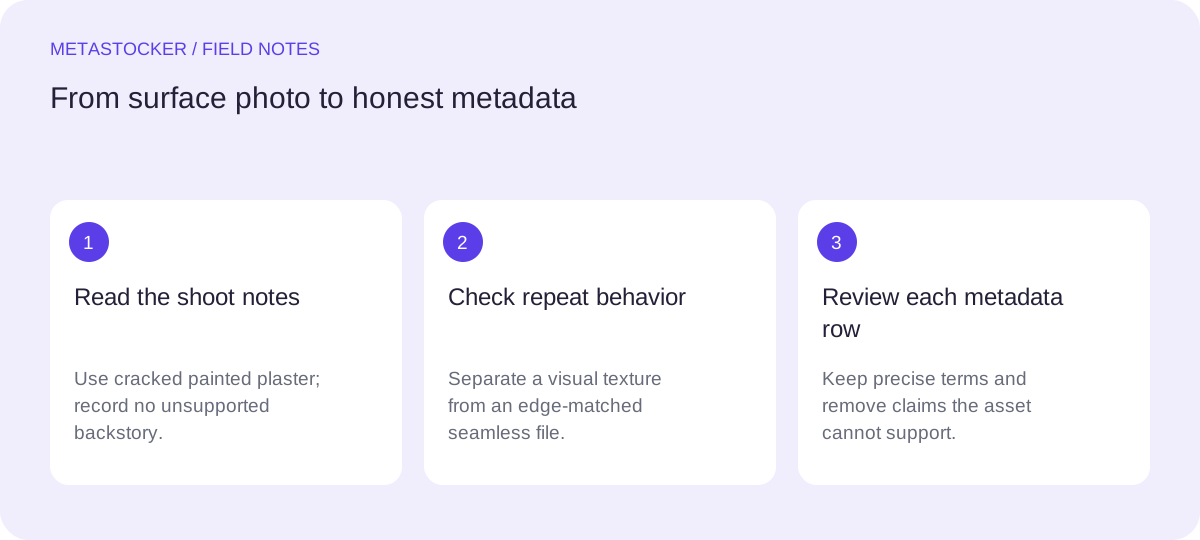
Start with the file’s actual promise
Before writing metadata, decide what a buyer receives. A texture can show repeated cracks, chipped areas, and layered color within the frame without being suitable for edge-to-edge tiling. Repetition in the picture is a visual characteristic; seamlessness is a deliverable property.
Use “seamless,” “tileable,” or “repeatable background” only when the file has been prepared and checked for matching edges. If you have not verified that, describe it as a cracked painted plaster texture, abstract wall surface, or distressed background instead. This single decision prevents a buyer from expecting a technical feature the file does not provide.
- Visual repetition describes what the eye sees.
- Seamless describes how the asset can join at its edges.
- Do not convert a design possibility into a file specification.
Record facts before adding interpretation
The shoot note in this scenario supplies the subject: cracked painted plaster. It does not supply a location, material history, ownership, date, or exact colors. Keep those unknowns out of the metadata. You may describe visible characteristics such as cracks, peeling paint, rough surface, or distressed appearance when they are genuinely present in the image.
Avoid guessing that the surface is old, abandoned, industrial, historic, exterior, or from a particular country. Avoid naming a paint color unless the image and your own notes support that description. “Abstract” can describe the image’s visual treatment, but it should not replace the concrete subject.
- Use supplied facts first, then defensible visual description.
- Do not add location, ownership, age, brand, or backstory without evidence.
- If a feature is not visible or documented, leave it out.
Build a title that clarifies the asset
Write a short phrase or sentence, not a pile of search terms. Put the main subject near the beginning and add the most useful distinction afterward. For a non-seamless photograph, “Cracked painted plaster texture” is clearer than “Seamless cracked painted plaster texture.”
For a genuinely checked tileable file, the title can say “Seamless cracked painted plaster texture for repeatable background design.” That wording communicates both the subject and the deliverable. Do not use both claims for the same file unless the file truly supports them.
- Lead with cracked painted plaster.
- Add “seamless” only after edge matching is verified.
- Keep the title descriptive rather than keyword-shaped.
Non-seamless example title: Cracked painted plaster texture
Verified tileable example title: Seamless cracked painted plaster texture for repeatable background design
Choose precise keywords in layers
A useful keyword set moves from the concrete subject to visible attributes, then to reasonable design uses. Start with terms such as cracked painted plaster, plaster texture, and cracked surface. Use wall texture and painted wall only when the image or notes support them. Add accurate descriptors such as rough, distressed, weathered-looking, abstract background, surface detail, and grunge texture only when they fit the image.
Do not repeat the same idea with padded variations, and do not add unrelated subjects such as brick, concrete, marble, wood, people, architecture, or a specific location. If the file is not tileable, omit seamless, tileable, repeat pattern, and pattern background. If it is verified, those terms may be relevant, but they should not overwhelm the actual subject.
- Subject: cracked painted plaster, plaster texture, cracked surface.
- Appearance when visible: cracked, rough, distressed, layered paint, surface detail.
- Use: background, backdrop, design resource, abstract texture—only when appropriate.
- Technical claim: seamless or tileable only for a checked deliverable.
Worked example: two honest metadata paths
Example: imagine the same photograph contains a close view of cracked painted plaster. The photographer has not created an edge-matched tile, so the file is a visual texture image rather than a seamless deliverable. The metadata should help a buyer find the cracked painted plaster texture without promising repeat use.
If a separate edited version has been edge-checked and exported for repetition, keep the subject terms but change the technical language. The two records may describe related assets, yet they should not share a careless blanket tag list.
Path A — ordinary texture photograph
Title: Cracked painted plaster texture
Keywords: cracked painted plaster, plaster texture, cracked surface

Path B — verified repeatable deliverable
Title: Seamless cracked painted plaster texture for repeatable background design
Keywords: seamless cracked painted plaster, tileable texture, repeatable background, plaster texture, cracked surface
Review platform limits and export carefully
Platform rules are not interchangeable. Adobe Stock’s current guidance allows up to 49 relevant keywords, emphasizes the first ten, and requires metadata in the contributor account language. Shutterstock’s guidance calls for 7 to 50 relevant keywords and accurate, individual descriptions. Check the current contributor portal before submission because policies and upload screens can change.
If you use a local metadata generator, treat its suggestions as editable drafts. A requested tag count proves only that the count was requested or produced; it does not prove that every tag is accurate. Review each row, remove unsupported claims, and export only ready metadata. A CSV exporter does not upload or submit the work, guarantee acceptance, or embed metadata into the original photograph.
- Keep the first ten terms especially focused on the subject and key distinction.
- Use the language required by the target account or marketplace.
- Inspect imported metadata in the contributor portal.
- Check current platform requirements before uploading.
Before you continue
- Confirm whether the file is actually seamless or only visually repetitive.
- State the documented subject: cracked painted plaster.
- Remove guessed location, age, ownership, brand, and history.
- Put the main subject in the title and first keywords.
- Use seamless or tileable only after edge matching is checked.
- Tailor keywords to this file; remove repetition and unrelated concepts.
- Review the current marketplace rules and portal metadata before submission.
Sources and editorial approach
Prepared with AI assistance. Worked examples are illustrative. Automated checks do not replace checking the requirements of your stock platform. How these guides are made.